We know that Trump and his Big Lie cronies are plotting to do everything they can to undermine our elections in 2026. Whether it’s trying to end mail-in voting, targeting registration programs, blocking vote-counting, even trying to ban states from encouraging people to vote – it’s going to be no-holds-barred from them this year as they try desperately to block the free and fair elections.
But we’re going to cut through the noise, and we’re going to be ready for whatever dirty tricks they try. And we’re going to do it with community power and preparation, not panic.
Hands Off Our Vote is Indivisible’s national program to ensure all eligible voters get to cast their ballot, and that those ballots get counted. We’ll help you be ready to respond to any attacks, and we’ll shine a light on the bad actors threatening our basic constitutional rights.
By signing up you’ll get notified of key voting deadlines in your state, get updates on any threats to your voting rights and learn how to counter them, and be ready to mobilize in defense of your vote. You’ll also play an important role in rapid response moments whenever and wherever they try to pull those dirty tricks. We have tremendous power to protect our elections in 2026. Sign up here to get started and join the Hands Off Our Vote movement.
Hands Off Our Vote: Election Protection 101 & 201
This August, Indivisible is holding two trainings on election protection: the actions you and those around you can take to ensure every eligible voter can vote, every vote is counted, and the results are honored and the winners seated.
Sign Up Now!Traditionally election protection programs have focused on key swing states where the risk is highest. But this year, Trump is going for wholesale disenfranchisement across the country, so we’re stepping up and launching our biggest program in Indivisible’s history. And even if the elections are secure where you live, you can help protect at-risk voters in targeted areas during rapid-response moments and be a trusted messenger against the flood of disinformation.
What We Can Do: Our Plan to Push Back
Hands Off Our Vote is a national program, but its power comes from you, your community, and the work we can do together. We’ll focus on four main paths to help protect elections in every state:
- Help pre-bunk voting misinformation and be a trusted local messenger. We’re the most reliable messengers in our own networks and communities. Hands Off Our Vote will share information and resources like social graphics, designed to get ahead of lies about the election and spread accurate info instead. We can use them to inoculate against misleading information, and people are more likely to believe it because it’s coming from someone they know and trust.
- Track local/state attacks on voting rights and respond. In a year this big, we’ll all need to be eyes and ears to shine a light on attempts to undermine our vote. If local election administrators or elected officials try to make changes that make it harder to vote or have a free and fair election, we can be ready to respond fast. Maybe it’s writing letters to the local paper, maybe it’s a protest, maybe it’s reaching out to press, maybe it’s something that merits a broader response – the goal is to make sure that desperate republicans can’t try to steal the vote because they think that no one will notice or have the power to push back.
- Participate in national calls to action and be ready for rapid response moments. Hands Off Our Vote will share out calls to action whenever they’re needed across the country, so we can stand together when they try something. National community power, all working to protect the vote! Even if elections are smooth in your area, you can help when other areas are targeted by joining emergency phone banks or uplifting rapid response actions.
- Get trained and ready for election support and mass mobilization this fall. There will be two national trainings in August, and more this fall. If Trump and his allies seek to deny the election, like seizing ballot boxes or refusing to seat the election winners, Hands Off Our Vote and partners across the country will be ready to mobilize for large-scale protests.
HANDS OFF OUR VOTE! A TOOLKIT FOR ELECTION PROTECTION
We’ve created a comprehensive toolkit to help you get started, be an effective messenger, start planning for rapid response moments, ask the right questions of your election officials, and lots more. Start learning what you can do to make sure our elections are protected in 2026.
Learn how to protect our elections Download the printable PDF version
Hands Off Our Vote: Election Protection 101 & 201
This August, Indivisible is holding two trainings on election protection: the actions you and those around you can take to ensure every eligible voter can vote, every vote is counted, and the results are honored and the winners seated.
Sign Up Now!HANDS OFF OUR VOTE! TOOLKIT
What’s In The Hands Off Our Vote Toolkit
The toolkit is designed to help you get prepared, get connected, and be ready to respond if issues arise in your area. Our biggest strength comes from building community power and you’re encouraged to connect to your local Indivisible chapter or other community groups, but it’s also important for each of us to be a trusted messenger in our own circles and get trained for whatever comes next. Each section of this workbook is on a different tab, so make sure you click through or expand the document tabs sidebar in the view menu. The toolkit covers:
- What to Do Right Now: Here’s where to start. Attacks on voting rights have already begun, so we’ve gathered some first key tasks to help you get ready.
- Be a Trusted Messenger: With new developments every week, untrustworthy election deniers in power in some states, and confidence in media at an all-time low, your friends and neighbors need a trusted messenger: you. This section includes guidance on how to talk about protecting the vote, educational graphics for you to share, and some basic slides introducing Hands Off Our Vote to present to your groups or wherever you can reach people.
- Rapid Response Playbook: The fastest and most powerful response is local. This section has tips on how to raise the alarm when your right to vote is threatened, and where to go for additional help if needed.
- Talking to Decisionmakers: Start asking questions now: what are you doing to ensure that the 2026 election is free and democratic, that every eligible voter gets to cast their ballot, and that those votes will be counted and honored? We include some questions for two different groups: your local election administrators, and for Members of Congress home for recess and holding public events.
- Group activity // Scenario Planning: We already know many of the ways that they’re going to try to subvert the election – and that’s a helpful thing, because it lets us practice and prepare. The Freedom Trainers have developed an extensive scenario planning workbook that can be a useful exercise in thinking through how you and your networks will respond in these situations.
- Fighting Disinformation: Proven-effective tactics on how to respond, person to person or in public posts, when faced with disinformation, without taking the bait or unintentionally amplifying their lies.
- Looking Ahead to Fall: Check here for a sneak peak of what we can expect when summer ends, including a record-breaking early vote program.
- It Takes All of Us – Resources From Across the Movement: links to helpful resources from other organizations fighting to protect our vote in 2026.
Activate the Vote
It’s time to get in formation. Their attacks on our ability to vote are unprecedented, so our response has to be the same. Start talking now to everyone you can about how they’re trying to take away our vote and steal the election, all in a desperate attempt to cling to power – and that if we start now, we have the power to stop them.
Check your registration – and keep checking it regularly
Trump and his election-denying henchmen have been demanding that states hand over their voter lists, all in an effort to find voters to kick off the rolls. Some states are running their own voter purge efforts, often based on inaccurate or outdated information, and it’s possible that this fall the Supreme Court will change the law to allow states to kick people off the voting rolls just days before the election. The best way to prevent this is to make sure your registration is up to date, continue to check it regularly all the way up to the election, and help others do the same. Every state has an online system to check your registration, or visit Vote.org
Get your ID
This shouldn’t be necessary. Voting should be easy and frictionless, and voter ID laws solve for a problem that doesn’t exist, while making it harder for eligible voters to cast their ballot. Nevertheless, we know that in many states there are requirements, and we need to ensure everyone is planning ahead. Now is the time to make sure you have a current ID that works for your state’s requirements, and find or apply for a certified copy of your birth certificate or passport if you can. So far Trump has been unsuccessful in trying to force through the SAVE Act, but it would be devastating for millions, especially anyone who has changed their name for marriage or other reasons. The more you can prepare yourself for whatever may happen, the more time you’ll have to help others to ensure they can vote.
Join an upcoming training
We’ll have election defense 101 and 201 trainings in August. If you can’t join live, register anyway – we’ll send out all the information and resources from each training the next day. And more trainings will take place throughout the fall – watch indivisible.org/our-vote for registration info and updates.
Get connected
Hands Off Our Vote will have ways to join the fight for everyone, whether you’re a new solo activist or in an Indivisible group. But in rapid response moments we’re far stronger when we’re connected in our communities, so you’re encouraged to find or start an Indivisible group, student or faith group, or other local organizing home.
- To find an existing group near you, visit indivisible.org/get-involved/find-a-group/
- If you’d like to start a new chapter, visit: indivisible.org/get-involved/register-a-group/
- If you’re in Michigan, Ohio, Alaska, Texas, Iowa, North Carolina, or Georgia, sign up for Indivisible’s Battlegrounds program: www.mobilize.us/indivisible/event/916480/
Start building your contact and volunteer lists
If they try to change the rules, suddenly close or move polling places, enact massive voter roll purges only days before the election – who are you calling? What group of friends or fellow activists can attend a rapid response protest or join a voter purge phone bank with you? Start making those plans now and having those conversations, so you’re ready for whatever happens this fall.
You can use the scenario planning section to help brainstorm, but at a minimum know who you’re calling in your own circles to make sure they have accurate information. It’s part of being a trusted messenger.
Learn your updated laws and who enforces them
Who runs the elections in your area? Are they trusted, responsible stewards of the vote, or MAGA lapdogs whose main priority is making sure their favorite candidates win, even if it means making it hard or impossible for certain communities of voters to cast their ballot? Knowing who you’re dealing with can help anticipate what tricks they might try, and plan accordingly.
A helpful place to start is these resources from Bolts mag: Who Runs Our Elections and Who Counts Your Votes
Make sure your election administrators and elected officials have a plan
Once you know who’s responsible for your elections, it’s time to ask them some questions. See the ‘Talking to Decisionmakers’ section for guidance on what to ask two different sets of officials: your local and state election administrators who are responsible for the nuts-and-bolts of the election, and your Members of Congress who need to pledge to speak up for our right to vote, and make sure the results are honored and the winners are seated next January.
Find local volunteer opportunities now, and sign up to be a poll worker or monitor this fall
The team at Ground Control have created a web page to help you find election protection-related volunteer opportunities near you. Go to https://www.wearegroundcontrol.org/ and enter your zip code to see what’s available now and find information on becoming a poll monitor or worker.
Watch for new developments
This year it’s not enough to confirm your registration, make sure your ID works, and call it good. We know that attacks will be ongoing, and it’s going to take all of us to push back against their desperate attempts to cling to power. It’s time to tune in, get engaged, and be the eyes and ears of the movement.
How we talk about the election matters. And the best person to push back against lies and misinformation is you. We’ve gathered some basic guidance on how to talk about the threats to our elections this year, and emphasize that together we have the power to fight back.
Messaging Guidance on election protection
TOP POINTS:
- It’s our right to pick our own leaders. But a desperate Trump and his enablers are trying to keep people from voting in order to control our elections and ensure they can cling to power, no matter what the voters want.
- Republicans know that their policies are deeply unpopular. But instead of trying to earn your vote by creating policies that help our communities, they’re trying everything they can to keep us from voting. They want to seize even more power, and they’re willing to do anything to do it.
- We are not powerless – we can organize to defeat these efforts and ensure every eligible voter can cast their ballot and be counted.
ADDITIONAL MESSAGES:
- Our elections are safe and secure, and unauthorized voting is vanishingly rare. But Trump is willing to disenfranchise millions through restrictive voter ID laws and cuts to voting access if it means he can hold onto power and force through his self-enriching policies a little longer.
- A political party tries to court your vote. An authoritarian regime tries to keep you from voting.
- Overwhelming turnout is an election protection tactic. If we all turn out to vote and help others do the same, we can ensure that the results are unquestionable and the will of the voters is clear.
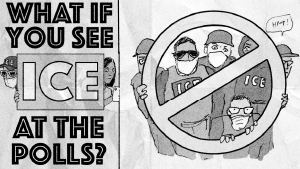
- They’re threatening to deploy ICE and federal troops to the polls in order to discourage voters, spread fear, and depress turnout, in hopes it will be enough to change the outcome of the election. But we can stop them by organizing early, supporting at-risk voters, and using community power to push back against their intimidation tactics.
- The time to fight is now. If we’re worried about our elections, our rights, and our safety, we can’t just wait until it’s time to vote. We need to get into the work now, raising awareness and highlighting anti-voter changes to our elections to make sure they can’t fly under the radar.
- Their attacks on our ability to vote don’t impact everyone equally – and that’s by design. This regime wants to keep specific groups from voting, including Black and Brown voters, new Americans, and the disabled, so they can seize more power.
- By passing laws that make it harder to vote, aggressively gerrymandering to undermine our electoral power, and pushing for total control over our elections, MAGA Republicans have made it clear that they are ready to get between us and our right to vote if it helps them stay in power.
- When it comes to mail-in voting, there’s nothing they won’t do to try to stop it – despite Trump himself voting by mail. They’ve called for its total elimination, demanded that the votes not be counted, even tried to turn the postal service into the deciders of who is and isn’t allowed to even drop a ballot in the mailbox. But mail-in voting has been used safely and securely in American elections for hundreds of years, and ensures that every eligible voter, including the disabled and members of the military serving overseas, get to vote.
- Trump and his Big Lie cronies have put election deniers in key election oversight roles, effectively disbanded the federal office that provides support for state election officials and keeping our elections secure, and done everything they can to undermine confidence in the outcome of our elections.
- They’re desperate to stay in power, so they’re trying to destroy trust in our elections and undermine our vote. But when we work together to build community strength, mutual support, and inclusion in defense of our rights, we’re going to be an unstoppable force to make sure that we can vote and those votes are counted.
- What happens next is up to us. Our country is strongest when all of us show up, speak out and refuse to be intimidated. Every eligible voter should have a say in the decisions that impact our lives.
Graphics/SoSha toolkits
We’ve created a library of graphics for you to use – they’re formatted for social media, but can also be incorporated into slide shows or used in other ways. They’re gathered in two ways: we have a SoSha toolkit that lets you share directly to your platforms of choice, and a Brandfolder link that lets you download the infographics directly. Helping to recruit others to protect the vote and sharing accurate information on anti-voting attacks are two of the most effective things you can do right now to make sure every eligible voter gets to cast their ballot this year.
- Join Hands Off Our Vote SoSha:
- https://share.indvs.org/toolkit/hoov-abd8
- 2026 Election Risks Scenarios Sosha: https://share.indvs.org/toolkit/hoov-e1a6
- 2026 Election Day Scenarios Brandfolder: https://brandfolder.com/s/bk6mwx7g2cmxpznnrvrv5jx
Slides: Talking to your group about Hands Off Our Vote
We’ve created a short slide deck to help you introduce Hands Off Our Vote to your group or organization. It covers the basics of the program and why it’s so important this year, the four main ways everyone can help protect our election, and has some conversation starters so you can start identifying potential problems in your area and making a plan to respond. Speaker’s notes are in each slide. To view and use the deck, visit Hands Off Our Vote Slides for public presentations
To plan ahead for some common election threats, visit the Group Activity: Scenario Planning section.
Why Rapid Response?
Laws may need to be changed to protect voters, election deniers need to be removed from positions of power, and voting access needs to be expanded – but these are long-term solutions that don’t address immediate issues. When something happens that risks taking away the vote or impacting election administration, the single most effective way to counter is to respond FAST. Half a dozen people outside an election office with signs within a few hours of an event is more powerful than a bigger protest that happens later, after the news cycle has moved on. Whether the goal is to push back on local attacks on your vote, speak out in support of targeted local election administrators or impacted communities, or shine a spotlight on misinformation or bad behavior, we want to be ready to respond before it happens.
Sometimes, the reverse is also true! If a local official is standing strong in support of our right to vote, pushing back against destructive proposals, or facing harassment or fake investigations, it’s important that we respond quickly to back them up and show that the community stands with them. And events to thank election workers are always appropriate, and help spread a pro-voting, pro-community message.
What Do We Escalate?
Different types of events require different responses. Sometimes, all that’s called for is sharing accurate information, writing a letter to the editor, or holding a local action like a visibility brigade or a honk-and-wave. But some events call for a higher level of response.
- Violence or threats of violence is never a thing for you to handle directly. First, notify local authorities or emergency services, ensure your own safety, and then record what’s happening if you can do so safely. Also get it on the record by reporting it to the Election Protection hotline at 866-Our-Vote and/or organizations working to protect voters in your state.
- Bad behavior by election workers: this can be things like openly biased poll workers, attempts to discourage or block voter registration, incorrect or unevenly-applied ID requests, or misinformation being shared around where, when, or how to vote. By shining a light on what’s happening, you can help ensure that they follow the law. Consider reaching out to local press to share what’s happening.
- Local- or state-level attempts to drive down turnout in specific areas: last-minute closure of polling sites, aggressive voter roll purges, or vague or misleading information on voting. This is where being ready to respond can make a huge difference – volunteers can help redirect voters, share out correct information, and join phone banks designed to make sure everyone gets a chance to cast their vote.
- Federal attempts to undermine our elections: harassing or targeting election workers for fake investigations, trying to seize ballot boxes, delaying or blocking vote-counting, or deploying Federal officials at poll sites. These are always major events that call for notifying local and national press, documented on film if you have direct visual access, and working with others for large-scale response or protest. Tag @Indivisibleteam on any social posts so we can help get the word out as needed and coordinate with national partners.
Before there’s a problem
Make sure you know who you’ll reach out to if problems arise. Beyond posting on your own social media platforms or holding a protest, think about who you can partner with in your community or can help get the word out – we’re stronger when we work together.
- Other organizations and groups in your area working to protect the vote, including other Indivisible chapters so that you can build a coordinated response
- Community, faith, and business leaders you know
- Local media outlets
- Social media and local influencers
- Election officials
- Elected representatives
Points to remember
- Sometimes the most effective thing we can do is document. If you see something happening in the moment, filming it for future follow-up or press or legal use is a key way to get it on the record and provide support.
- Center those most impacted and follow their lead. Not all communities are equally hurt by attacks on our voting rights: Black and immigrant voters, students, and economically-disadvantaged communities have historically been disproportionately targeted with voter suppression tactics. Before you plan a response, try to find out if others are already working on it, and consider providing support or partnering.
- None of this may ever happen in your community! While there are risks, there are also tens of thousands of dedicated workers and volunteers across the country who’ve spent decades working to ensure safe, secure, smooth elections. Celebrate that, and build on it. There will be opportunities for you to help from a distance if issues arise elsewhere.
Where To Get Help
This is where you can ask questions, get support, and find official information.
- Election Protection Hotline: if you have questions, need help or voting information, or need to report something you’ve seen or experienced, contact the Election Protection Hotline:
- English: 1-866-OUR-VOTE (call or text)
- 1-888-VE-Y-VOTA (en Español & English)
- 888-API-VOTE (Asian languages & English)
- 844-YALLA-US (Arabic & English)
- https://866ourvote.org/ –offers live chat with trained volunteers available during staffed hours. Also available on other platforms, including WhatsApp and social media channels
- For details on voting in your state, check with your state election website or visit 866.ourvote.org or vote.org. Remember that laws may change quickly, so confirm all information.
- Links to state election offices can be found here: https://www.fec.gov/introduction-campaign-finance/how-to-research-public-records/state-election-offices/
| INDIVISIBLE GROUP MEMBER? | Notify the relevant local officials as needed, then reach out to your group leader or state organizer to let them know there’s an issue. They can work with you to help figure out the best way to respond. | |
Press and Social Media Guide for rapid response
What are the best ways to share information with a lot of people quickly? Through press and social media! Combining press strategies with an effective social media presence is key to creating a comprehensive public narrative and drawing maximum attention to attacks on our voting rights. To be successful, we need to get the same message out repeatedly, in different ways, as quickly as possible. By leveraging both traditional press outlets and social channels, we can reach outside of our normal circles of influence and reach a diverse, widespread audience.
Press
To effectively combat election subversion, it is crucial to establish partnerships with local media outlets, issue timely press releases, secure op-ed opportunities, and conduct informational press conferences. Indivisible Project has guidance on all of this in our Group Support Hub Resource Library:
- Press Releases, Media Advisories, and More
- How to Get Press to Cover Your Event
- Getting Interviewed by the Press
- Tips From Journalists: How To Build Great Connections with Media
- Opinions Pieces: I Want to Write an OpEd, I Want to Write an LTE, and I’d Like to See an Example of an Effective LTE
By collaborating with the media, we can raise awareness, educate the public, and dispel misinformation about voting. Op-eds from experts and community leaders can provide valuable insights and perspectives, while press conferences can directly engage with the media and public to address specific instances of subversion and reinforce the importance of a fair and transparent electoral process. Together, these strategies can help ensure accurate reporting, build trust in the electoral process, and protect everyone’s right to vote.
Social Media
A lot of people get their information on social media, making it a powerful tool for increasing visibility and disseminating information quickly. By aligning with the messaging guidance outlined in this toolkit and adopting an intentional and strategic approach to social media usage, we can create a coherent and compelling narrative that reinforces the importance of free and fair elections and clearly outlines the dangers posed . Check out our best practices for social media engagement in our comprehensive social media guide.
Use social media to your advantage and collaborate with local media outlets to spread the word about attacks on our voting rights. Share educational content on social media platforms, such as shareable graphics, infographics, and videos, to make complex concepts easier to understand. Engage with local newspapers, radio stations, and online news outlets, and offer to provide insights or interviews to raise awareness about the issue.
The more our local and state officials know that we’re paying attention, the less comfortable they may be making changes to voting or trying to disenfranchise voters. Below are a few questions to ask them to get you started – you can ask them in person at events, or use them to write letters to the editor or op-eds in your local paper, post on their social media accounts, etc.
State/Local Election Officials: what questions to ask
Below are some suggested questions to research or ask your local election administrators to make sure they’re focused on election protection. Remember that not all officials are equally committed to maximizing turnout or making sure that every eligible voter gets to cast a ballot, so trust but verify the information you receive.
The primary goal with local and state officials is to find out where and how updates will be shared out, how and when any proposed changes will be considered, and whether/how volunteers are needed before and during the voting period.
- How and where will you share out updates before the election?
- What’s your plan to communicate in the event of issues on and around Election Day?
- Do you hold public meetings? If so, when, and how can I join or attend?
- Do you have a shortage of poll workers?
- How can the public help protect our election from now through Election Day?
- Do you have informational resources or handouts that we can distribute?
- How have ID and other voting laws changed since the last election?
- Does our area allow for observers during the counting process? If so, what is needed to become an observer?
- How are you planning for possible intimidation at the polls, either from bad-faith partisan challengers or federal/ICE agents?
- What is the timeline and what are the milestones for certification of the election after the polls close?
Congressional recess guide: how are you protecting our vote?
Members of Congress are often home and holding local events in August, especially in mid-term years. (Sometimes, it’s the only time they’re available locally during their entire term!) It’s a great opportunity to get them on the record on voting and election security, and lets them know that it’s an important issue to their constituents. Some sample questions to ask:
- The Constitution says that states are solely responsible for administering elections. How will you protect our state from partisan federal takeover or interference?
- The Trump administration is trying to seize the voter rolls that contain our personal information. How are you going to protect our privacy and ensure that all eligible voters get to cast their ballots?
- What steps are you taking to protect election workers and administrators from physical threats, harassment, and intimidation?
- Will you pledge to oppose any efforts to block the counting of ballots cast by eligible voters?
- Will you pledge to honor the election results, and refuse to participate in any schemes to prevent the winners from being seated next January?
From Freedom Trainers
We already know many of the ways that they’re going to try to subvert the election – and that’s a helpful thing, because it lets us practice and prepare. The Freedom Trainers have developed an extensive scenario planning workbook that can be a useful exercise in thinking through how your group will respond in these situations. There’s no need to do all of these – and in fact, you shouldn’t! Instead, consider which scenarios are most likely to occur in your area, and pick the top 1 or 2 to start making plans. You don’t need a plan for every possible scenario to be prepared. Understanding what election sabotage will feel like, and how your group can respond, is the key.
Each scenario includes a potential threat to voting and how it might occur, material to help you consider how you and your group would respond, and some historical examples of responses that have worked to counter it in the past.
Visit Freedom TrainersElection Disinformation: What to Expect and What to Do
With election deniers—election liars, to be accurate—embedded in the Trump White House and Congress and their fascistic disinformation campaigns amplified across social and mass media, countering the flood of MAGA falsehoods can feel hopeless.
It is not hopeless.
Election lies are not random. Their purpose is to hold on to the massive power we voters can take away. Before an election, they make people afraid to vote or convince them voting is pointless. Afterward, they falsely turn delays or mistakes into “proof” of fraud so power-seekers can reject results they do not like.
We cannot stop well-funded actors from producing lies. But we can keep those lies from working. We can disrupt them where it counts: in voters’ hearts, minds, and choices.
What to Expect
Fear: “Voting is dangerous or impossible”
Expect false or misleading claims—especially targeting Black and Brown voters and immigrant communities—that eligible voters will be turned away, lack required identification, or face danger at polling places. Threats that ICE will patrol voting sites, or that violence will erupt, exploit legitimate fears—even though voter intimidation is illegal.
Some dangers and barriers are real. The answer is not false reassurance. It is verified information, concrete help, and community support.
Despair: “Voting will not matter”
The Big Lie drumbeat gets louder and louder. Constant repetition of disproven—and often hypocritical—claims about “rigged” elections affects all of us, no matter how clearly we know they are false. An even bigger lie bombards young and marginalized communities – the lie that neither party cares about them, so their vote is meaningless.
And then there is the chaos. The Trump regime follows Steve Bannon’s “flood the zone” tactic: Spread so many contradictory, outrage-inducing claims that people feel there is no truth and no one to trust. Confused and exhausted people are easier to discourage—and less likely to vote.
What We Can Do
We don’t need to become election experts or play whack-a-mole to find the best comeback to every election lie – in fact, that’s counter-productive!
The foundational lie propagandists want all of us to believe is that humanity is irrevocably divided and about to attack one another without provocation. A divided, frightened populace can easily be manipulated into believing they need a “strong man” savior.
In fact, most Americans widely share core personal values: Over 80% of U.S. adults agree that family, respect, trustworthiness, kindness, integrity and freedom are vital to their lives. Each time we demonstrate mutual respect and shared values, we plant the seed that all the lies that push mistrust, hate and fear just might be suspect.
Our goal is not to prove someone wrong, but to give them the faith to turn off the emotional reactions disinformation triggers, and turn on their empathy and critical thinking. They’ll do the rest themselves. (And “they” means “all of us.”)
1. Learn to Spy the Lie
Pause and consider the source when a message:
- Tries to make you furious, terrified, or hopeless before offering evidence.
- Uses a dramatic headline, clipped video, or claim with no traceable source.
- Scapegoats a vulnerable community or turns one incident into proof that an entire system is corrupt.
- Offers only outrage while steering people toward the messenger’s power, profit, or “protection.”
- Uses images, audio, or video with strange details or mismatched dates and locations.
Ask: Who benefits if I believe or share this? What evidence should exist? Can I confirm it independently?
Healthy skepticism should help us find reliable information—not convince us that nothing is true.
2. Be the Trusted Messenger
Most disinformation is shared inadvertently! It’s called “misinformation,” and shared by people who are afraid or trying to protect people they care about. In conversation, or even in online messaging:
- Listen before responding.
- In your response, open with the related values you share. (Anti-vaxxer? You likely both share a deep investment in your family’s health.)
- Respect that the person has come to their conclusion with thought, even if misguided.
- Ask clarifying, no-hidden agenda questions: Where did this come from? Who benefits?
- Do not demand an immediate change of mind. A moment of doubt—or willingness to check—is progress.
3. Use the Indivisible Truth Sandwich to inform your conversations and messaging
The Indivisible Truth Sandwich is a simple three-part structure:
- Discover: Begin with shared truth or common values.
“Every eligible voter deserves to cast a ballot and have it counted.” - Disrupt: Expose the manipulation without repeating its slogans.
“Some politicians benefit when safeguards are portrayed as suspicious. Why would carefully counting every ballot be less trustworthy than rushing?” - Dream: Return to truth, hope, and action.
“Let’s use verified information, give election workers time to count, and defend every voter’s voice.”
The truthful common value should be the beginning, the ending, and the part people remember.
4. Follow Disinformation Best Practices
- Do not help the lie travel. DO NOT SHARE THE LIE. No clicking, commenting, or restating the lie, even to debunk it.
- Give energy to the truth. DO SHARE, click, watch comment on good content
- Be authentic.
- NO arguing or name-calling. And no “my fact is better than your fact” debate. You won’t get anywhere and will inflame the belief that we are divided and disdainful.
- Know when to disengage. Walking away protects your energy. Your real audience may be the persuadable people quietly watching.
5. Keep People Voting—and Grounded Afterward
- Normalize voting. Talk about it as a standard community practice.
- Destigmatize uncertainty. Most people are not election experts. Questions are normal.
- Acknowledge barriers, then focus on access. Pair concerns with verified information, practical help, or trusted resources.
- Prompt action. Encourage people to check their registration, confirm requirements, make a voting plan, and help someone else.
- After the polls close, stay disciplined. Do not spread dramatic claims before verification. Remind people that election-night totals are unofficial, counting takes time, and careful verification is a safeguard—not evidence of fraud.
Election liars want fear to become withdrawal, despair to become apathy, and uncertainty to become chaos. Every respectful conversation, accurate message, and voter who participates makes their lies less effective.
Plan to vote as early as possible
This year, NO ONE should wait until Election Day on November 3rd to vote if you can avoid it. And if it’s available to you and you’re able, vote in person – we all know that mail-in voting is safe and accurate, but that hasn’t stopped Trump and his allies from doing everything they can to destroy it. So if you can, vote in person. And keep an eye out soon for a major, coalition-wide early voting program!
If you can: take Election Day off from work or school
Whether it’s helping to redirect voters to new or changed polling locations, joining last-minute phone banks to share out updated information to targeted districts, helping to arrange rides for last-minute voters, or throwing a voting party at the polls, we’re going to make Election Day the pro-democracy holiday it should be. So if you have the privilege of taking the day off, get it scheduled now and start making your Election Day plan!
Make an Election Day plan
Whether you can take the day off or not, start thinking about how you want to be part of the party on Election Day. This includes being a poll monitor or worker, and if you have legal training consider being part of an election protection legal network, to help staff hotlines that will be available to everyone nationwide.
Be ready to mobilize
We all hope that voting and the counting of ballots goes smoothly. But in the event of major issues, a coalition of organizations will be ready for mass protests and mobilization – we’ll settle for nothing less than free, democratic elections, and if need be we’ll take to the streets and stay there until democracy prevails. The right to vote is a core Constitutional value worth protecting, and together we’re an unstoppable force.
Remember: Election Day isn’t the end
Our work stops when every vote is counted, the results are honored, and the new congress is seated. If Mike Johnson or his cronies in Congress try to claim that there is uncertainty around the results due to false or unproven claims of fraud or interference, we’ll be ready.
The independent resources on this page are from other organizations and aren’t part of Indivisible’s Hands Off Our Vote program. But they offer specific, targeted information that you may find useful.
How to Spot Federal Voter Intimidation at the Polls (Protect Democracy)
https://protectdemocracy.org/work/how-to-spot-and-push-back-against-federal-voter-intimidation
Know Your Rights: Federal Agents at the Polls (ACLU)
https://www.aclu.org/know-your-rights/federal-agents-at-the-polls
Español, (Arabic) العَرَبِيَّة, (Mandarin/Standard Chinese) 普通话, (Cantonese) 廣東話
The Gen-Z Election Defense Toolkit (Protect Democracy)
https://protectdemocracy.org/gen-z-toolkit/
Election Policy Tracker (Voting Rights Lab)
To track proposed and pending legislation that would impact voting rights and elections. https://tracker.votingrightslab.org/
Brennan Center’s Guide for Election Officials (Brennan Center)
A Quick Reference Guide for Election Officials: What election officials can do now to prepare for the risk of external interference by federal actors
Black Voters’ Survival Guide (866-Our-Vote)
https://866ourvote.org/wp-content/uploads/2026/07/ElectionProtection_BlackVotersSurvivalGuide_2026.pdf
The Daily Digest: the day’s election protection news (Try and Stop Us)
https://www.tryandstopus.org/news
Act Free to Be Free: A State and Local Pro-Democracy Framework
A strategy memo created by Minnesota faith, labor and civil society leaders
https://www.documentcloud.org/documents/28490455-act-free-to-be-free/
Hands Off Our Vote Flyer
Download the PDF to print and hang in your window.
Download FlyerSoSha Posts
Use the > and < arrows to select the message you want to share