Saturday is No Kings Day
The wannabe-king is intent on sabotaging our midterms. This weekend, we turn out by the millions to nonviolently defend our elections, our democracy, and our rights. First in the streets, and then at the polls. Join us.

In just a few years, Indivisible groups have built so much power in their communities. You’ve become important centers for civic engagement, for shared learning, and for creating community. We know that’s hard work, and we want to tell you that we – Indivisible staff – are so grateful!
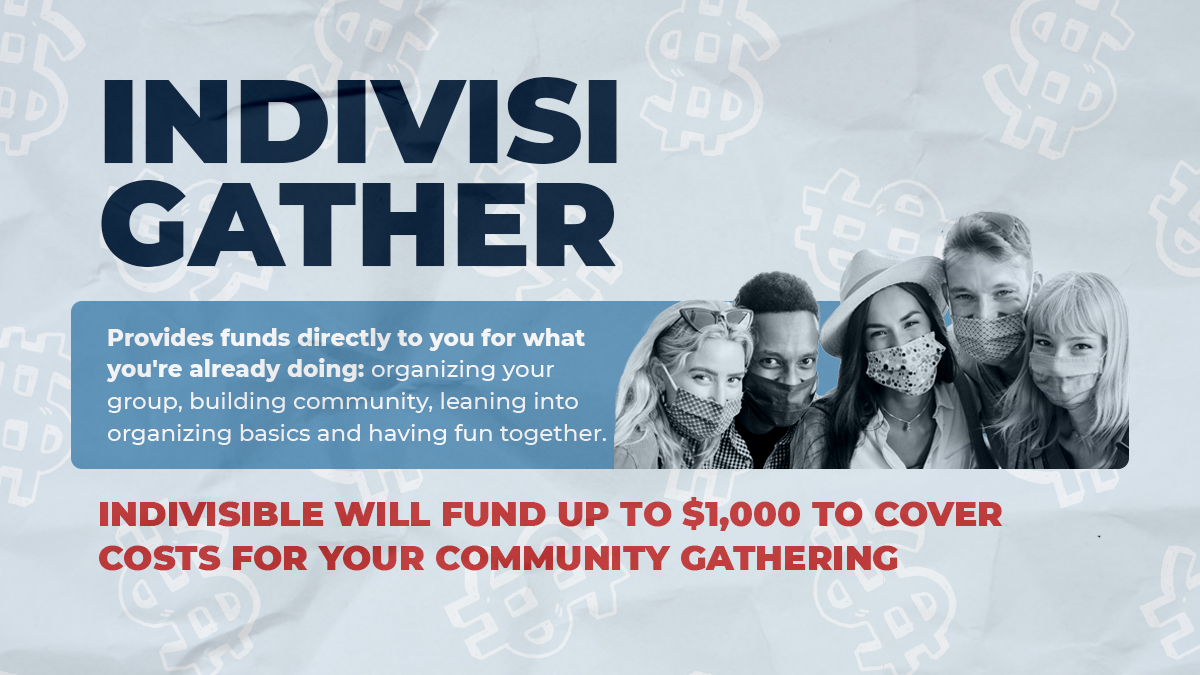
That’s why we’re launching our largest ever reimbursement program, IndivisiGather, to provide funds directly to you for what you’re already doing: organizing your group, building community, leaning into organizing basics and having fun together. You and your Indivisible group can access a reimbursement of up to $1000 to cover costs for a gathering. Picnics, barbecues, ice-cream socials, coffee chats, beach gatherings, hikes, virtual get togethers, etc. Whatever members of your group like to do — find some time to do it together!
Learn more about how this process works in our program overview here.
This toolkit has general community building tips for your Indivisible group and materials specifically for planning IndivisiGather events.
Once you’ve purchased the items for your event, please fill out the reimbursement form as soon as you can. The form will be open until November 30th and we expect reimbursements to take 3-4 weeks from submission to process.
Spending time with your group (virtually or in person) and building relationships may seem like it’s just a fun time, but it’s actually a key organizing skill. Organizing at its core is all about relationship building. Building your group community will make the work more fun, more sustainable and group members will be more committed and enthusiastic to dedicate their time. Overall, understanding what drives members of your group and knowing what skills they bring will also ensure your group can work efficiently and collaboratively.
Here are some overall, ongoing tips to for building your group community:
Learn why group members show up. Everyone comes to Indivisible and to activism for different reasons. Take time to really dig into why group members are invested in this work and what their personal stake is. You can have these conversations with folks individually or consider having a member share their personal story at each meeting.
Build relationships and get to really know folks. Do you know how many kids your members have? Or their pets’ names? The activities they like to do to relax or have fun? Ask! Of course be thoughtful and intentional in the way you ask personal questions (start surface level and tread lightly if some members don’t seem comfortable opening up), but it’s important to invest time in genuinely getting to know group members as the people they are.
Help members build relationships with one another. It’s great if you as the group leader have strong relationships with group members. It’s even better if they have strong relationships with one another. Help facilitate this through icebreakers at meetings, inviting folks to come early or stay late to socialize during meetings, etc. Members will be more invested in the group and more likely to show up if they build real friendships with others.
Prioritize accessibility. Think about accessibility in all your events, activities and communication. This includes everything from when/where/what time you’re holding events, considering adding virtual components to in person events, asking folks what they need to be able to fully participate, delivering communication/trainings in different ways and being always open to learning and feedback. The Pacific Alliance has a great toolkit on planning accessible events that you can check out here and the Autistic Self Advocacy Network has helpful tips here. The Progressive Style Guide also has helpful information to ensure you’re using inclusive language.
Connect members to the big picture. Make sure to spend time considering how to connect small actions to the bigger picture. Explain wins your group has had and always share the ‘why’ behind things you’re asking folks to do.
Say thank you. It’s simple, but always say thank you one more time than you think you should and shout group members out for their contributions. Group members are volunteering their time, so take time to ensure they know they’re appreciated. (Oh and speaking of, we appreciate YOU very much as an Indivisible leader!).
Plan social events. Not every event needs to have a clear action focus — in fact, it’s important to sometimes take a break from the action and have events that are purely to get to know one another.
For this specific event, some tips to consider include:
Build an event customized to your group. Consider what your members like to do and plan your event accordingly. Don’t know? You can do a quick survey to collect preferences. Make sure to consider how to create a welcoming atmosphere for current and new members — pick a location near public transportation, consider including a virtual element for those unable to/uncomfortable with attending in person, ask explicitly about accessibility needs. (Once again, check out the Pacific Alliance toolkit for more specifics here.)
Have a dedicated welcomer/greeter. Make sure everyone who attends is welcomed as they arrive. Consider having the greeters introduce newer members to more veteran members as they show up so that everyone has someone to talk to.
Cultivate a joyful environment. Do you have any members who are musical? Consider having some live music. Do you have any artists? Work with them to decorate. What about bakers/chefs? Make sure you have some tasty snacks or a meal. There are a ton of ways to get creative here.
Have fun! Ultimately, enjoy yourself and keep an eye on the attendees to ensure folks feel included.
You know your group best, so you should plan an event that best supports your unique community building. That said, here’s a quick sample agenda you can customize for these community building events:
Welcome folks as they join! Make sure everyone is welcomed and have a sign in mechanism (like a piece of paper or computer/tablet). If you’re doing a virtual event, you can welcome folks verbally as they join the event.
Mix & mingle. This is about getting to know one another, so the majority of the event can just be casual mingling or it can be more structured depending on what works best for your group. For a virtual event, everyone can just chat in the main video conferencing room or Zoom/Google Hangouts to accommodate breakouts.
Quick programming. For an in person event, you may want the general feel to be more casual and just include a brief program. For a virtual event, you may want to build out a more structured event overall.
Personal Story Workshop. One great way to refresh your group members on organizing basics AND build your relationships/get to know one another better is to do a personal story workshop during your event. You can see more below including a worksheet for attendees.
Team Building Activity. You can also plan out some other activities to build your community! You can check out some ideas here or you can keep it really simple with some fun icebreakers, simply continuing to mingle with fun prompts or sitting down to eat together.
Wrap up. Close out the event by thanking everyone for joining. Usually it’s important to have a clear call to action, but since this event is really focused on community building just make sure folks know the next way to get involved and that you have everyone’s contact information.
Reminder to follow all CDC guidelines when planning in-person events and to have a clear plan for COVID precautions. Be sure to communicate out the precautions you’re taking in advance so folks can make an informed decision about attending and consider ways for folks who are unable/do not want to attend in person to participate.
Understand your own politicization
Thinking through our own stories helps us to view ourselves as inherently political beings. You likely weren’t born with a picket sign or a megaphone in your hand. What got you there? What were the facets of your life that eventually moved you towards feeling anger, empathy, or even action? Once you can articulate these things, you might find it easier to understand your position as a stakeholder on the issues you care about the most!
Build Community
Stories also connect us to one another and to the cause. When we share our stories we learn about what brought our peers to the same movement and in doing so, we can often find commonality with people we don’t know. Recognizing mutual self-interest can help build bonds between you and other group members and remind you why you’re all doing this work.
Build Understanding/Move Hearts and Minds
An honest story that demonstrates how abstract issues affect the lives of real people is one of the most effective ways to move someone on the things you care about. Reciting statistics and sharing research is wonderful, but when it comes down to it, folks are simply more moved by stories of human impact – and that’s especially true when someone shares their story directly with them.
Your story should highlight some of the key pieces of your life and draw a line from those pieces to you the person you are today.
Step 1. Ask yourself “What made me?” (My past)
Step 2. Ask yourself “Who am I?” (My present)
Step 3. Draw the connections.
Step 4. Articulate your personal story, from beginning to end.
Keep in mind:
Use the following outline to guide you as you develop your story:
Find the complete outline here.
Everyone in your group has a reason they have dedicated so much time to activism, but they may not yet be able to share that in a cohesive story. You can use the following tips to turn a team meeting into a personal story workshop.
This is an excellent opportunity to build community in your group. You should be aware that developing these stories may be easy for some and more challenging for others. For some folks this is likely to be an emotional experience, so be mindful of the tone you’re setting and make sure everyone in your group feels supported.
Follow the below steps to facilitate storytelling in your group:
Set the context. Explain why we tell stories and take a few moments to share your own story with the group to demonstrate. Review the anatomy of a story by pointing to the different elements of your own story.
Break into groups of 3 or 4 people. The groups should be small enough that everyone has time to share their story and can feel comfortable doing so to a smaller audience. Depending on the size and familiarity of your membership, it can also encourage people to talk with someone new.
Cover some basic ground rules for the small group reflection:
Start the discussion. Help the groups keep time to make sure that everyone has a turn.
After the last turn, bring the whole group back together to share. Ask a few members to share their story with the group. This encourages members to listen actively to each other, and also has them vet stories that are forceful and persuasive. And since some people are naturally modest about how powerful or unique their stories are, recognition from another member can help validate their significance.
To close, ask the group to reflect on the exercise itself. Ask group members to share their takeaways from the exercise.
The wannabe-king is intent on sabotaging our midterms. This weekend, we turn out by the millions to nonviolently defend our elections, our democracy, and our rights. First in the streets, and then at the polls. Join us.